
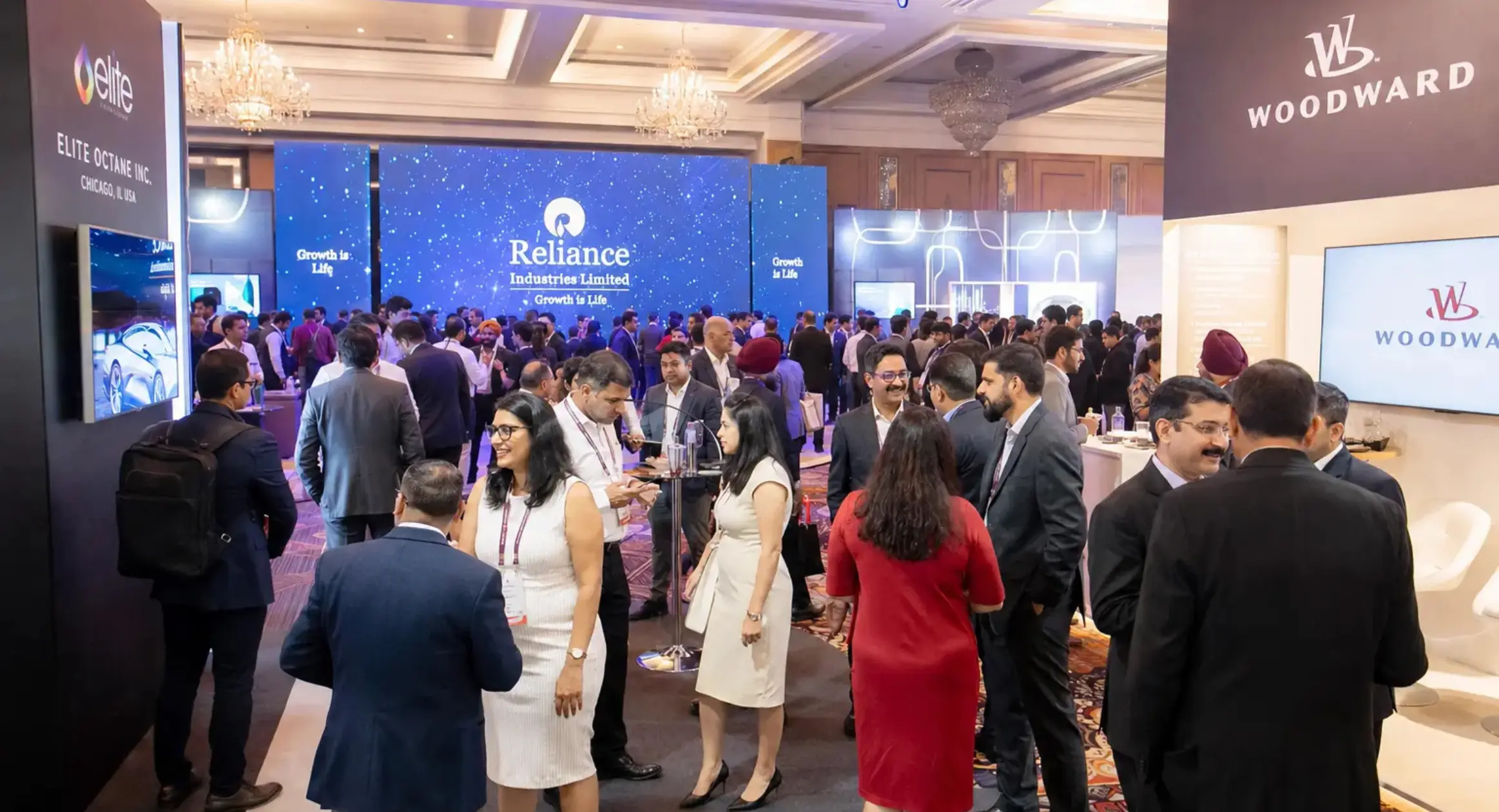
MICE stands for Meetings, Incentives, Conferences and Exhibitions. MICE event management is the process of planning, coordinating and executing these business events, including destinations, venues, accommodation, transportation, event production, delegates, hospitality and on-ground operations.
What Is MICE Event Management?
MICE event management is a specialised area of corporate event management that focuses on business gatherings and group travel programs. The term MICE represents four major formats: Meetings, Incentives, Conferences and Exhibitions.
A MICE event may be a one-day leadership meeting, a three-day annual conference, a corporate incentive trip, an exhibition, a dealer meet, an international sales gathering or a multi-city business program.
What makes MICE planning different from simply booking an event venue is the number of connected elements involved. A corporate group may require hotel rooms, airport transfers, meeting spaces, production, food and beverage, branding, registrations, activities, guest communication and live event management.
A professional MICE event management company coordinates these moving parts through one integrated plan so that the client does not have to manage every hotel, supplier, venue and operational team independently.
What Are the Four Types of MICE Events?
Although different organisations use MICE for different objectives, most programs fall into four broad categories.
1. Meetings
Corporate meetings are organised when businesses need employees, leaders, partners, distributors or other stakeholders to meet in a structured professional environment.
These can include board meetings, leadership meetings, sales meetings, annual business meets, dealer meets, product meetings, strategy sessions and company town halls.
Meeting management can involve selecting the right venue, planning seating arrangements, coordinating hotel rooms, arranging presentation technology, managing transportation and ensuring delegates move through the agenda smoothly.
2. Incentive Travel
Incentive travel is used by businesses to reward or motivate employees, sales teams, channel partners, distributors and other high-performing groups.
Unlike a normal holiday, a corporate incentive program is designed around a defined business objective and a carefully planned group experience.
A typical incentive program may include flights, accommodation, airport transfers, curated meals, team experiences, entertainment, sightseeing, award evenings and hospitality management.
Destinations such as Goa, Jaipur, Udaipur, Dubai and Bali can suit different incentive and corporate retreat requirements.
3. Conferences
Conferences bring larger groups together to share information, discuss business priorities, educate audiences, build networks or communicate important organisational ideas.
Corporate conferences can involve multiple sessions, speakers, breakout rooms, registrations, stage production, audiovisual technology, branding, food and beverage and delegate services.
Because many activities happen simultaneously, conference planning usually requires detailed schedules, supplier coordination and clearly defined responsibilities before the event begins.
4. Exhibitions
Exhibitions and trade events give businesses a physical platform to display products, demonstrate technologies, meet customers, connect with industry partners and generate commercial opportunities.
Exhibition management can include venue planning, exhibitor coordination, booth requirements, branding, technical infrastructure, visitor movement, registrations, logistics and on-ground support.
MICE management is not about managing one event supplier. It is about making every part of the business event work together as one experience.
What Services Are Included in MICE Event Management?
The exact scope of a MICE program depends on the size of the event, destination, number of delegates and business objective. However, professional MICE services commonly cover several areas.
- MICE event strategy and planning
- Destination research and recommendation
- Venue sourcing and venue coordination
- Hotel and room-block management
- Group travel planning
- Airport arrival and departure assistance
- Local transportation and delegate movement
- Event registration and attendee management
- Conference and meeting room planning
- Stage, sound, lighting and audiovisual production
- Event branding and communication
- Speaker and session coordination
- Food, beverage and hospitality management
- Incentive activities and destination experiences
- Exhibition and exhibitor coordination
- Vendor and supplier management
- On-ground event operations
For businesses, the benefit of combining these services is simpler coordination. Instead of communicating separately with transportation companies, venues, hotels, production teams and hospitality suppliers, the organisation can work through one structured MICE planning process.
Why Do Companies Invest in MICE Events?
MICE events are business tools. Companies usually organise them because bringing people together in the right environment can support objectives that are difficult to achieve through everyday communication alone.
Aligning Teams and Leadership
Leadership meetings, annual conferences and sales gatherings can help organisations communicate strategy, review performance and align teams around future priorities.
Rewarding Performance
Incentive travel can recognise employees, sales performers, distributors or partners while creating a stronger connection between the participants and the organisation.
Building Business Relationships
Dealer meetings, partner conferences, exhibitions and networking events create opportunities for businesses to communicate directly with important commercial audiences.
Launching and Showcasing
Conferences and exhibitions can support product launches, demonstrations, brand communication and industry engagement.
Creating Shared Experiences
Corporate offsites and incentive programs can combine formal business objectives with team engagement, hospitality and destination experiences.
How Do You Plan a MICE Event?
Successful MICE planning starts with the business objective rather than the venue. Choosing a hotel before understanding the group, agenda and operational requirements can create unnecessary compromises later.
Define the Business Objective
Start by defining what the organisation wants the event to achieve. Is it a sales conference, reward program, leadership meeting, exhibition or partner event?
Understand the Audience
Consider delegate numbers, origin cities, seniority, accommodation expectations, accessibility and the type of experience the audience requires.
Set the Budget
Build the budget around major cost categories such as travel, accommodation, venues, production, transport, food and beverage, experiences and manpower.
Choose the Destination
Compare destinations based on connectivity, hotels, venue infrastructure, local transport, delegate experience and the purpose of the event.
Select the Venue and Hotels
Evaluate room inventory, meeting spaces, event capacity, production access, food and beverage, location and transportation requirements.
Build the Event Journey
Map the delegate journey from registration and arrival through meetings, meals, activities and departure.
Coordinate Production and Operations
Finalise stage requirements, AV, branding, transport plans, supplier timings, hospitality and venue operations.
Execute On Ground
During the live event, operational teams coordinate guests, suppliers, venues, production and schedules in real time.
How to Choose the Right MICE Destination
The destination is one of the most important decisions in MICE event planning because it affects accessibility, cost, accommodation, venue choice and the overall attendee experience.
A destination that works well for a 50-person leadership retreat may not be suitable for a large conference or exhibition. The destination should match the format of the event.
Consider Connectivity
Review where attendees are travelling from and how easy it is for them to reach the city. Flight connectivity, road access, airport-to-hotel travel time and local transportation all matter.
Consider Hotel Inventory
A corporate group may require hundreds of rooms, meeting spaces, dining facilities and common areas within the same property or nearby hotels.
Consider Venue Infrastructure
Conferences and exhibitions may require larger ballrooms, breakout rooms, loading access, staging areas and technical infrastructure.
Consider the Delegate Experience
For incentive programs and offsites, the destination itself becomes an important part of the experience. Activities, dining, hospitality and local experiences can influence whether a location is right for the group.
How Much Does a MICE Event Cost?
There is no single fixed cost for a MICE event because the budget depends on the destination, delegate count, event duration, accommodation category, venue, production scale and program design.
Instead of asking only for a per-person figure, businesses should divide the budget into major cost categories.
- Flights or intercity travel
- Hotel accommodation
- Conference or meeting venue
- Food and beverage
- Airport and local transportation
- Stage, sound, lighting and AV production
- Branding and event materials
- Entertainment and activities
- Registration and delegate management
- Event manpower and on-ground operations
A useful MICE budget should also include contingency for operational changes, last-minute delegate requirements and supplier variations.
Common Challenges in MICE Event Planning
MICE events become difficult when individual components are planned separately without understanding how they affect one another.
Last-Minute Delegate Changes
Changes in names, flights, room requirements and attendance can affect transport, hotels, registrations and meal planning.
Complex Group Movement
Moving a large corporate group between airports, hotels, venues and activities requires accurate schedules, vehicle planning and communication.
Production and Venue Coordination
Technical production needs to match venue rules, access timings, power requirements and rehearsal schedules.
Multiple Vendors
A single MICE program may involve hotels, transportation companies, production agencies, activity partners, entertainment teams and venues. Clear ownership is essential.
International Requirements
International MICE programs add another level of coordination around flights, local operational partners, cross-border travel requirements, currencies and destination logistics.
What Does a MICE Event Management Company Do?
A MICE event management company acts as the central planning and operational partner for the corporate event.
It connects the client's business objective with destinations, venues, hotels, production suppliers, transportation, hospitality teams and other partners.
The role is not simply to source suppliers. A good MICE partner should understand how each operational decision affects the overall program and the delegate experience.
Before the Event
The team can support destination research, proposals, venue selection, hotel coordination, budgeting, production planning, registrations and event schedules.
During the Event
On-ground teams coordinate arrivals, guest services, transportation, venue operations, production, activities and supplier schedules.
After the Event
Depending on the scope, the team may coordinate departures, supplier closure, final reconciliations and post-event reporting.
How Should a Business Choose a MICE Event Management Company?
Businesses should evaluate a MICE partner based on planning capability and operational understanding rather than choosing only on the lowest quoted price.
Important questions include:
- Does the team understand the business objective?
- Can they manage the event from planning through execution?
- Can they coordinate venues, hotels, travel and production together?
- Do they understand delegate and hospitality operations?
- Can they support events across multiple destinations?
- Is the proposal clear about inclusions and exclusions?
- Is there a defined on-ground operations plan?
- Is communication centralised and structured?
The right MICE company should make a complex event easier for the client's internal team to manage, not create another layer of coordination.
MICE Event Management in India
India offers different types of destinations for corporate meetings, incentive travel, conferences, exhibitions and business events.
Commercial centres such as Mumbai, Delhi NCR, Noida, Bengaluru and Hyderabad can work well for business-focused meetings, conferences and corporate gatherings.
Destinations such as Goa, Jaipur and Udaipur can offer a different environment for incentive travel, corporate offsites, leadership retreats and destination programs.
The right Indian MICE destination depends on where delegates are travelling from, the size of the group, venue requirements, accommodation, budget and the type of experience the company wants to create.
International MICE Event Management
Businesses may also choose international destinations when they want to bring regional teams together, create an incentive experience or organise a cross-border conference.
Destinations such as Dubai, Singapore, Bangkok and Bali can serve different international MICE objectives.
International planning should consider travel documentation, flight schedules, hotel contracts, local transportation, local suppliers, venue requirements, delegate communication and contingency planning.
How Early Should You Start Planning a MICE Event?
There is no universal planning timeline because a small domestic meeting and a large international conference require very different preparation.
In general, earlier planning provides more flexibility when comparing destinations, securing suitable hotels, selecting venues and coordinating travel.
Large conferences, exhibitions, peak-season programs and international incentive trips usually benefit from longer planning windows because room inventory, venue availability and group travel can become more difficult closer to the event date.
The planning schedule should therefore be based on event complexity rather than using one fixed timeline for every MICE program.
Final Thoughts
MICE event management is about creating a complete business-event ecosystem rather than managing isolated bookings.
Meetings need the right business environment. Incentive programs need the right experience. Conferences need strong delegate and production management. Exhibitions need detailed operational and exhibitor coordination.
In every case, the quality of the event depends on how well the destination, venue, accommodation, transport, production, hospitality and people work together.
For businesses planning a corporate meeting, incentive trip, conference or exhibition, starting with clear objectives and one coordinated MICE plan can make the entire program easier to manage and more effective for the people attending it.
Bring Your Next Corporate Event Together with One Plan.
From meetings and incentive travel to conferences and exhibitions, speak with MICE Event India about your destination, group and event requirements.
Discuss Your MICE Event ↗